
Ultraviolet germicidal irradiation (UVGI) is a proven technology used in hospitals, laboratories, and commercial buildings worldwide. When installed inside your HVAC system, UV-C light emitters continuously expose the air passing through your unit to a specific wavelength of ultraviolet light that destroys the DNA of microorganisms.
What UV light neutralizes:
The result is a system that not only moves conditioned air, but actively sanitizes it with every cycle.
Coil Sterilization UV Lights are mounted directly in the air handler, aimed at the evaporator coil. This is the most common and cost-effective installation. The coil surface stays continuously exposed to UV-C radiation, preventing biological buildup on the coil, drain pan, and surrounding surfaces. Mold on your coil reduces system efficiency significantly; keeping it clean extends equipment life and maintains airflow.
Air Sterilization UV Lights are installed in the return air duct and cycle on with the blower. As air moves through the system, it passes through the UV field, disinfecting each pass. These systems are particularly effective for airborne pathogen control in homes with immunocompromised residents or in commercial settings with high foot traffic.
Many clients choose to combine both approaches for complete coverage at the coil and in the airstream.
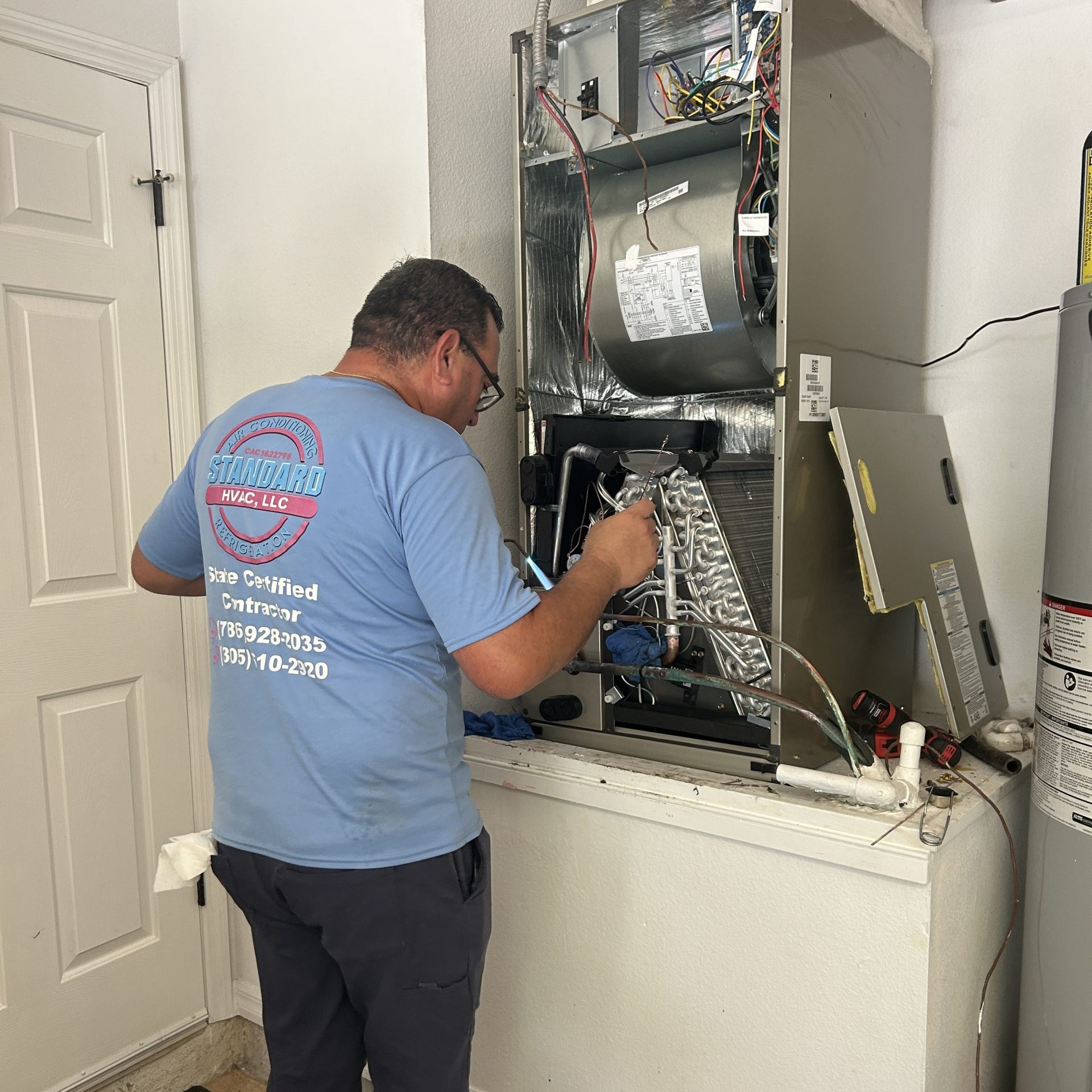
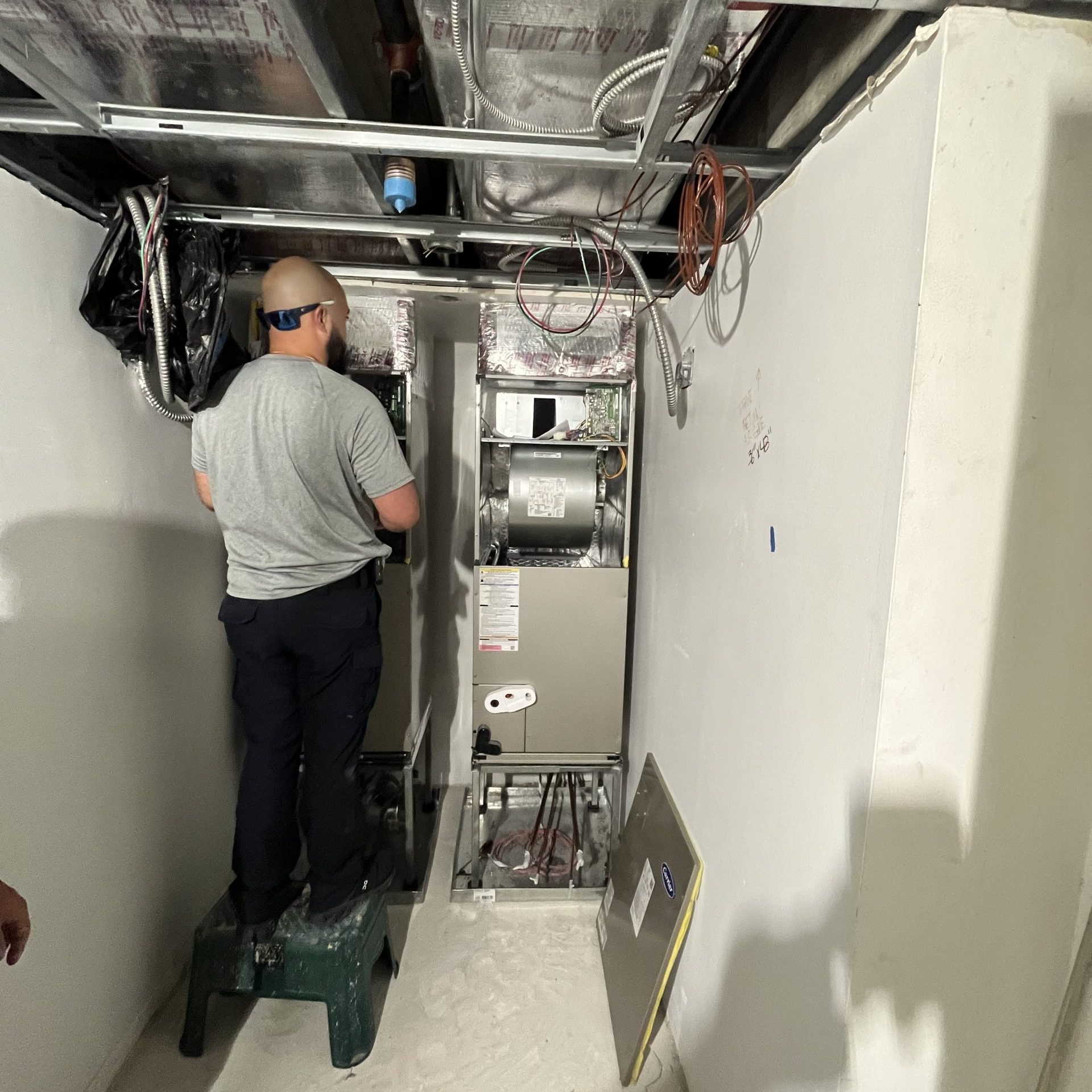
Standard filter maintenance alone is not enough to address biological contamination inside your air handler. UV light treats the source of the problem directly.
Our technicians begin by inspecting your air handler, coil condition, and duct layout to determine the best UV placement for your specific system. We then install the UV emitters and connect them to your system’s power supply, ensuring correct positioning for maximum coverage.
We verify the UV output is within germicidal range and confirm there is no interference with your existing components. The entire installation typically takes under two hours and requires no ductwork modifications in most cases.
We also advise you on bulb replacement intervals, typically every 12 to 24 months depending on the model, so your system stays effective without any guesswork.